
Shaping early-stage product definition for a European car brand, through the eyes of China’s next-generation drivers
A European car brand set out to define a new “in China, for China” vehicle. Its brand pillars were clear. What China’s next generation of drivers aspired to was not.
The deeper question behind
The brief was to find the inspirational anchors for an early-stage product definition. But there was a deeper gap — the brand’s Asia-Pacific team in China felt that headquarters in Europe did not fully understand Chinese consumers and the trends shaping them, and they were looking for a more effective way to help the European team see China as it really is. The deeper question was how design and research could become that bridge that does the translation.
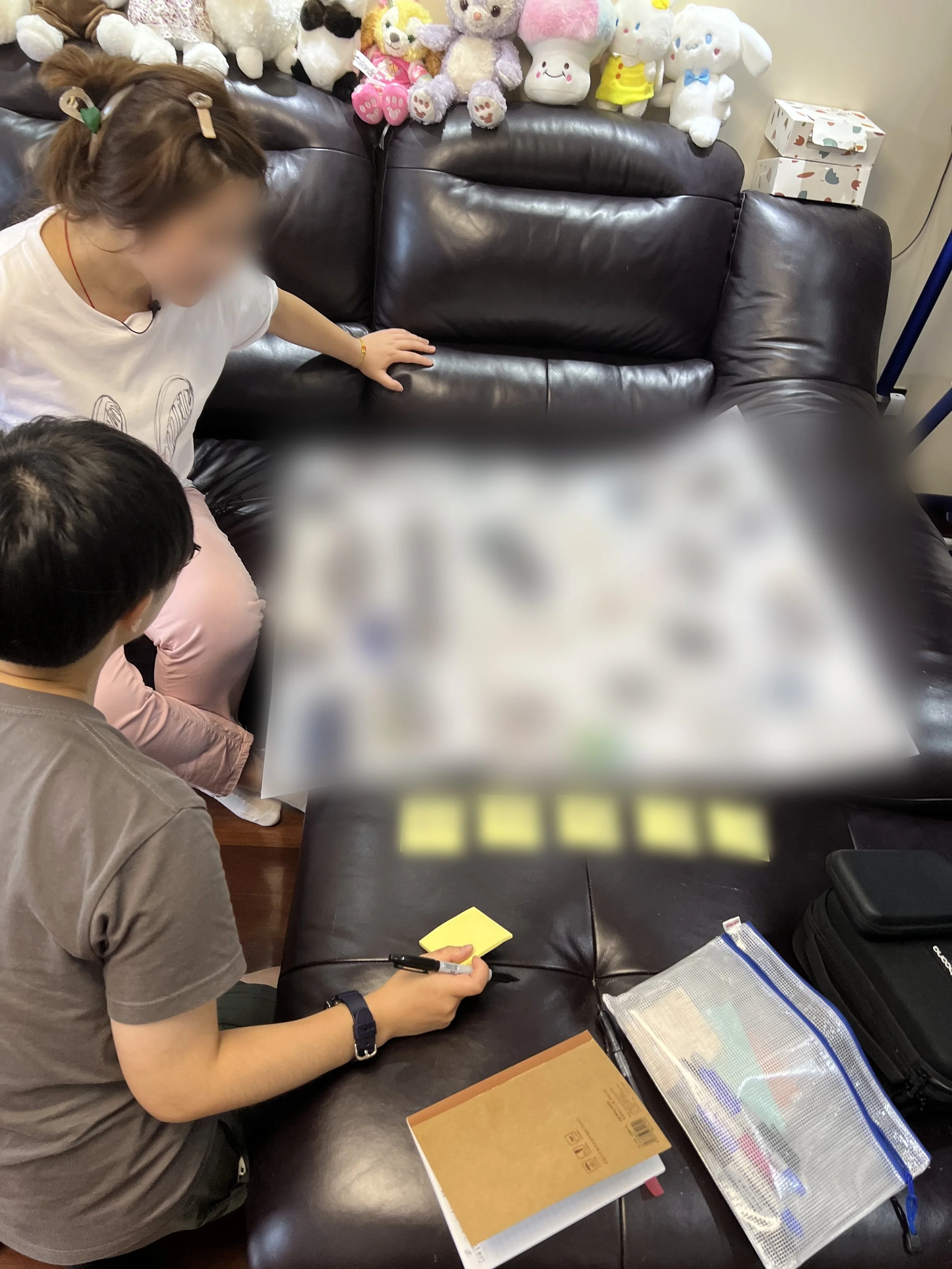
In the field: me facilitating a concept testing session in a participant’s home in Shanghai. (Details blurred for confidentiality)My leadership & impact: turning research into a bridge between teams
As the sole design researcher in a fast-paced, multidisciplinary team, I brought a socio-cultural lens to the project, combining futuring with in-depth interviews with aspirational consumers and domain experts to stress-test assumptions early.
Along the way, I:
Brought new ways of working to the studio. I helped shape futuring into a methodology and standard process for IDEO’s Shanghai studio. We also adopted a hypothesis-based approach, which kept the research plan focused and on direction within a tight project timeline.
Built the client’s own framework into the research. I drove the integration of the client’s framework into our research plan and process, so the work could connect with the client’s internal teams rather than sit in a silo.
Brought designers into the research. I mobilized designers on the team to collect futuring signals, coaching them hands-on along the way.
Linked the product definition back to business strategy. When the client asked for a persona as an additional deliverable, I took the lead on crafting it, laying the groundwork for reconnecting the product definition with strategic business considerations.
Distilled consumer voices to their essence. I turned consumers’ reactions to the concept tests into videos that captured what they said, authentically and precisely, making the insights vivid and evidence-based.
Outcome
The research gave the cross-functional and cross-location client teams a shared, evidence-based starting point for the “in China, for China” product definition. Our insights videos circulated within the client organization and drew a very positive response, including from the design team in Europe. The client team we worked with directly took the project’s framework forward internally, without friction. The work also earned buy-in from VP-level leadership in China and led to further projects with the client.
Key learning
In this project, design and research became acts of translation, both from China to headquarters in Europe and within the China team itself. The hypothesis-based and futuring approach helped the client team understand their own market and consumers more clearly, stay true to the brand’s pillars, and see new opportunities for design and innovation.
Storytelling mattered just as much — insights travel furthest when they stay close to people’s own words and to what matters to the client, shared in a way that is concise and precise.
Details of this project are kept general for confidentiality. Happy to discuss the approach in conversation.